Ph.D. student
Institute for Future Technologies (IFT), Paris

Human–computer interaction
Swarm robotics · Creative technology

See the real swarm

Thomas Juldo

I build interfaces that leave the screen: robot swarms you can pick up, soundscapes you steer with your head, and worlds that keep growing on their own.

Selected work

Selected work

01

Ph.D. research

Octon

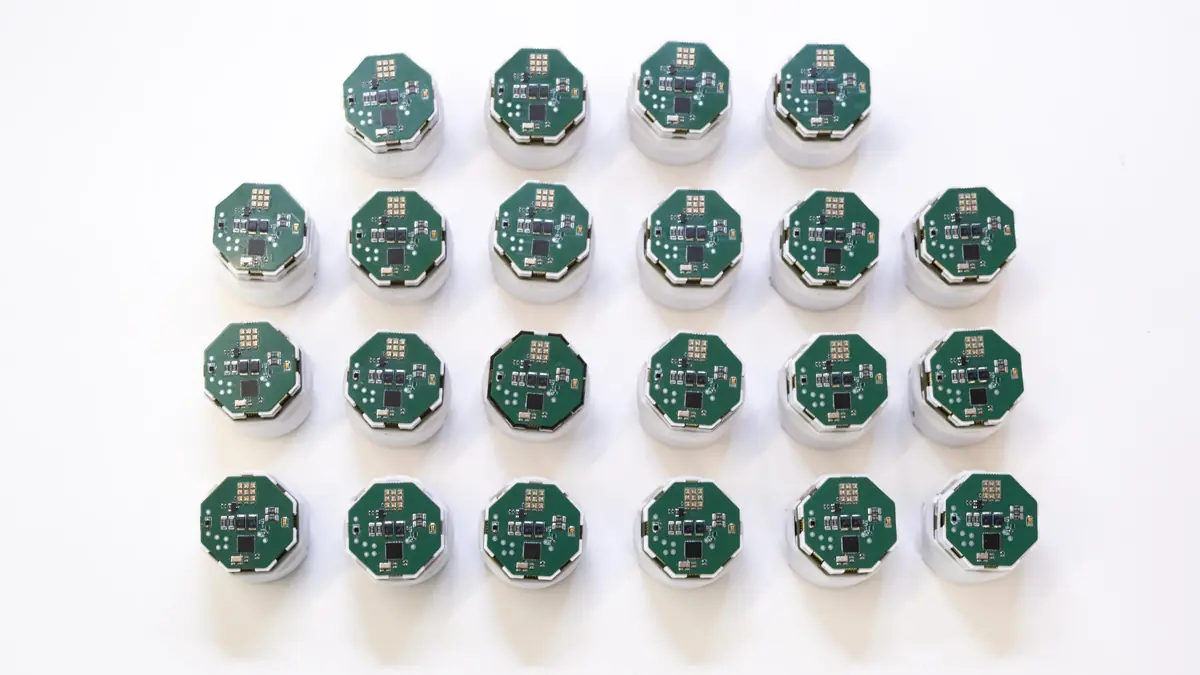
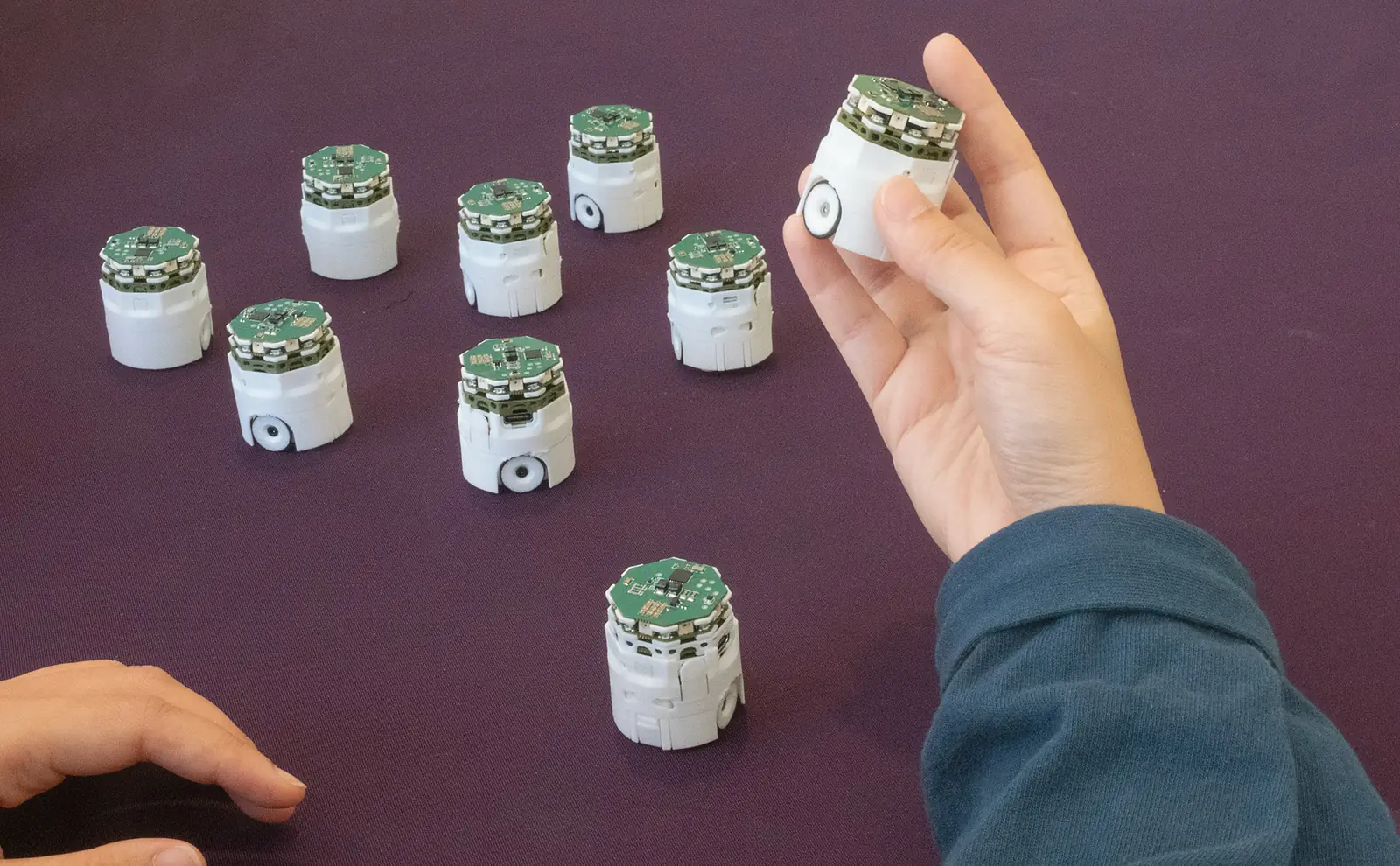
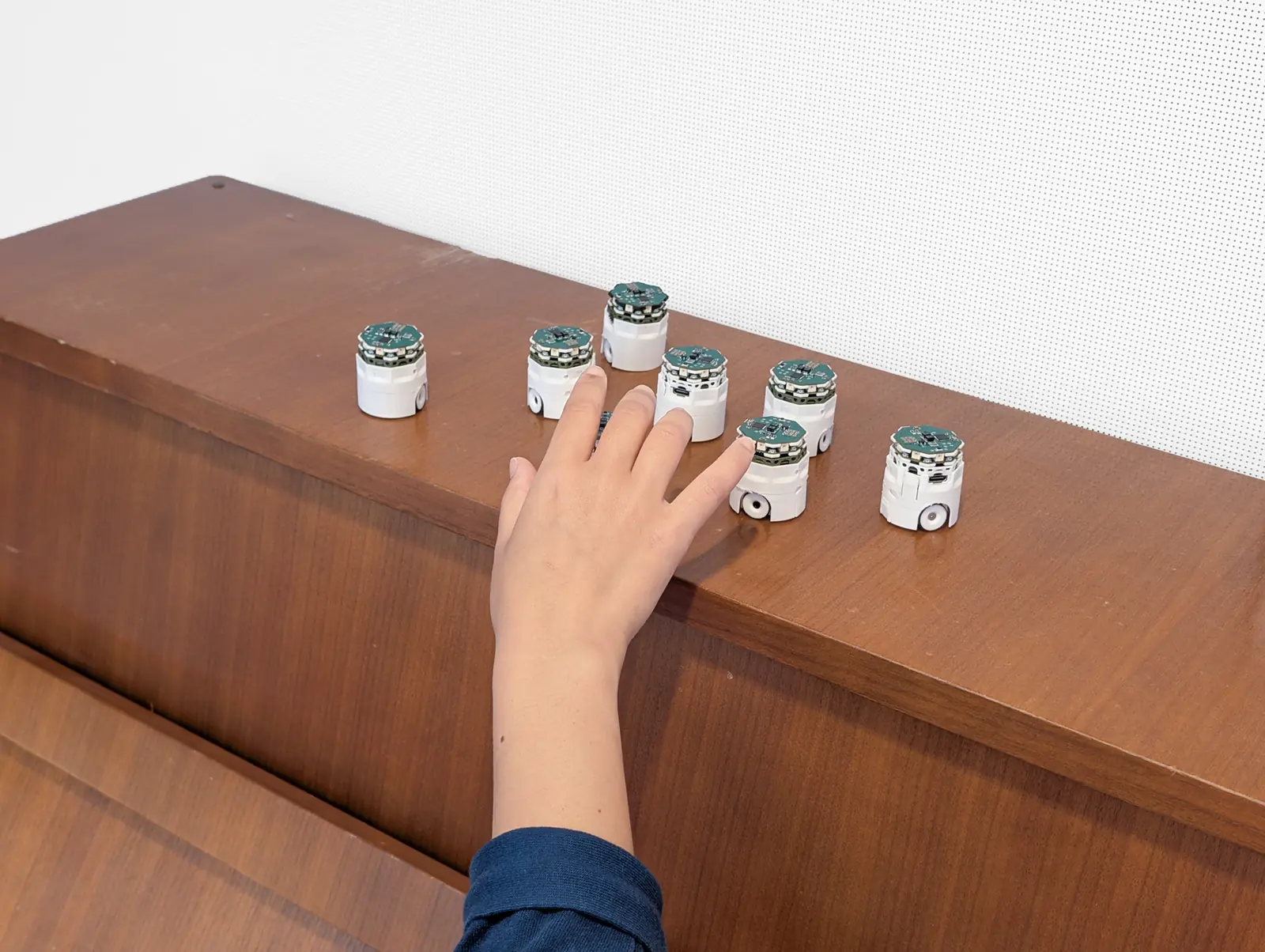
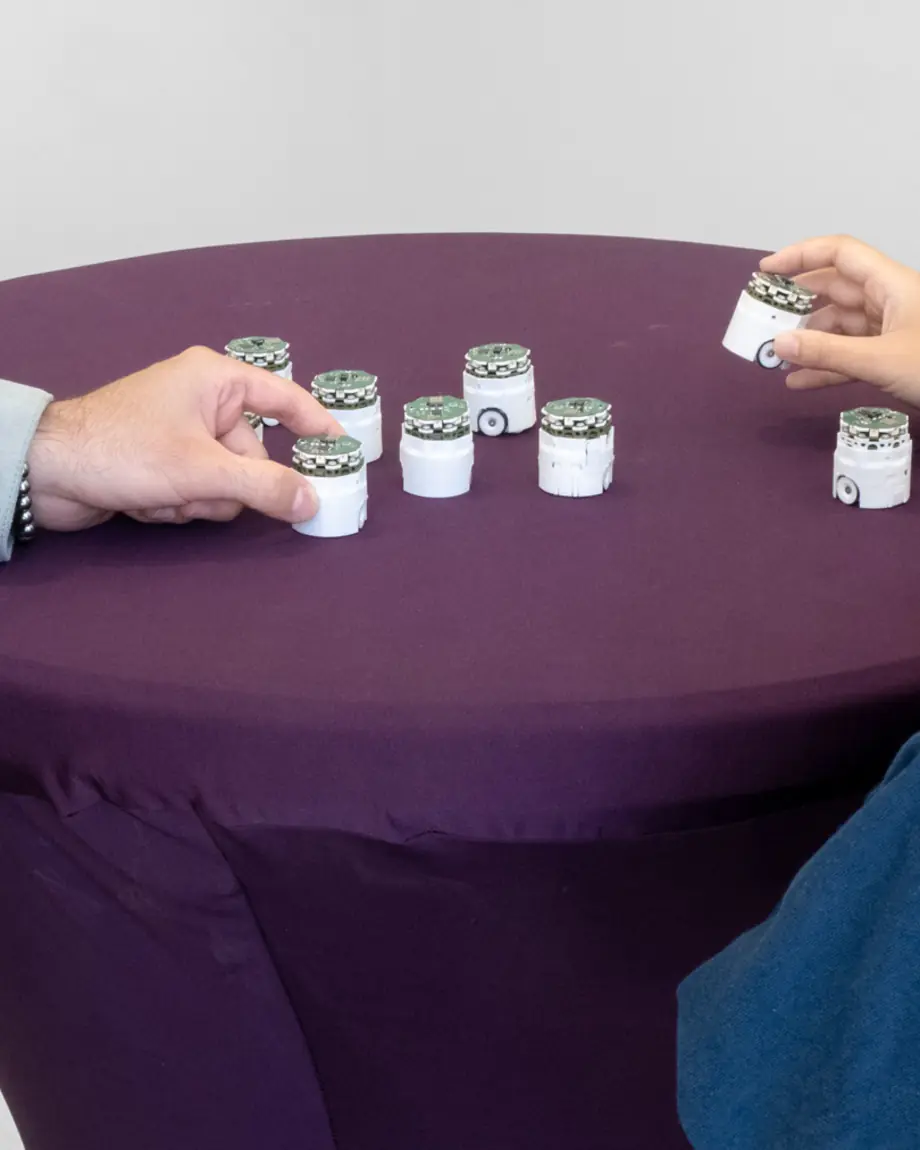
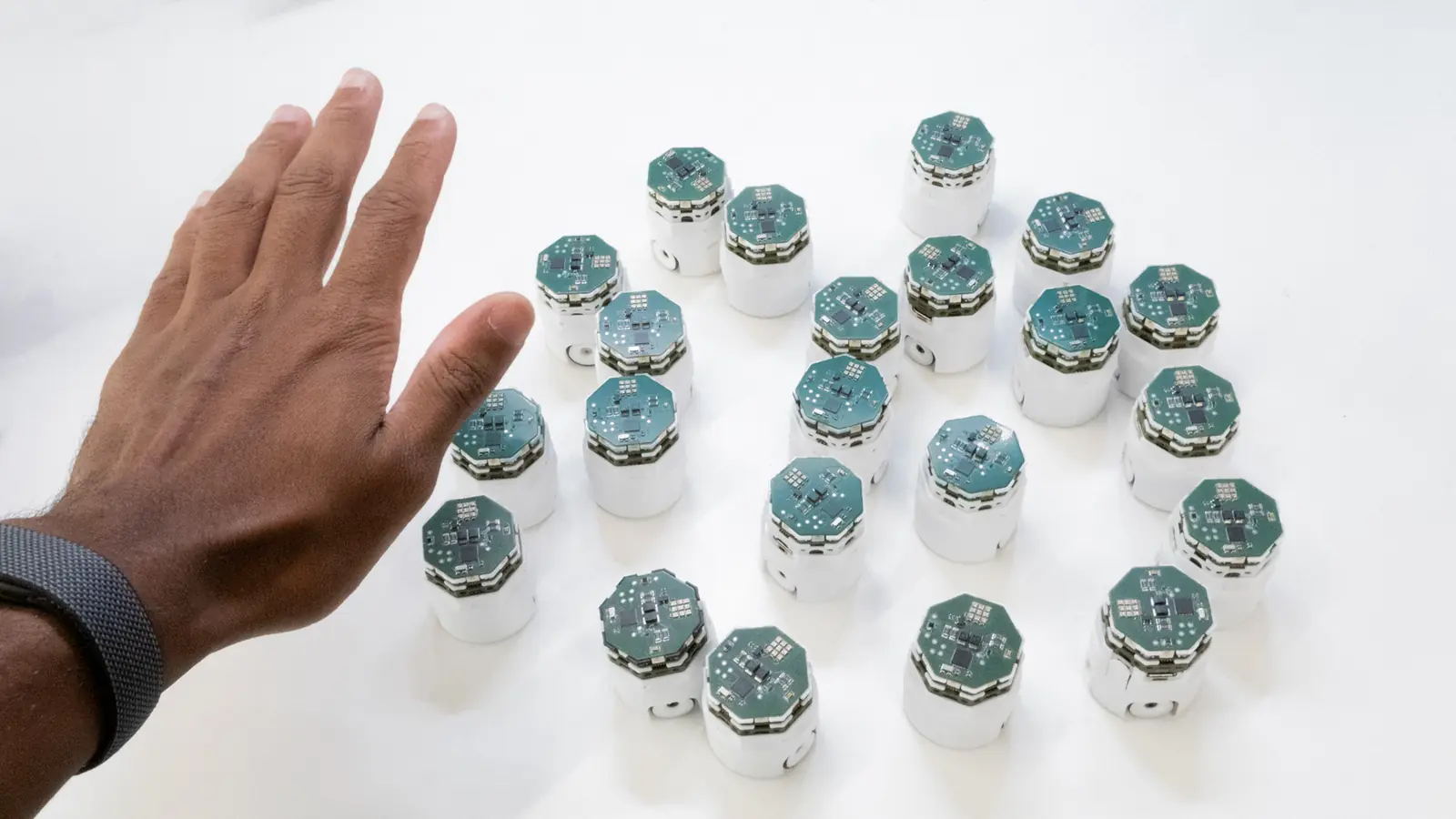
A tabletop robot swarm you can put down on any table and use within seconds, without an overhead camera, projector or tracking server.

Year
2025–now
Context
Ph.D. research, IFT · Sorbonne Université
Fields
Swarm robotics, embedded systems, HCI
Built with
ESP32-S3 · STM32 · infrared sensing · on-device ML

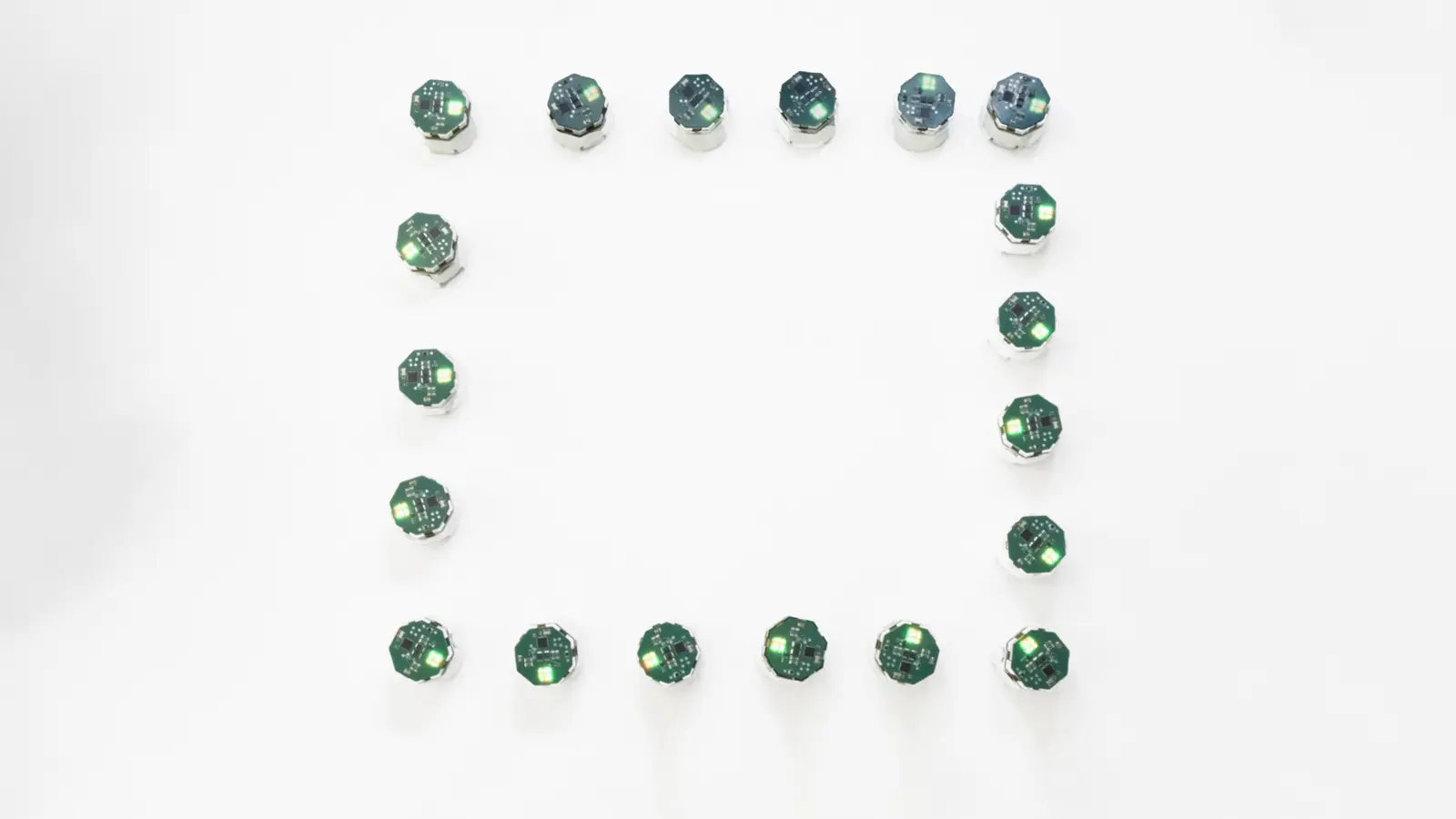
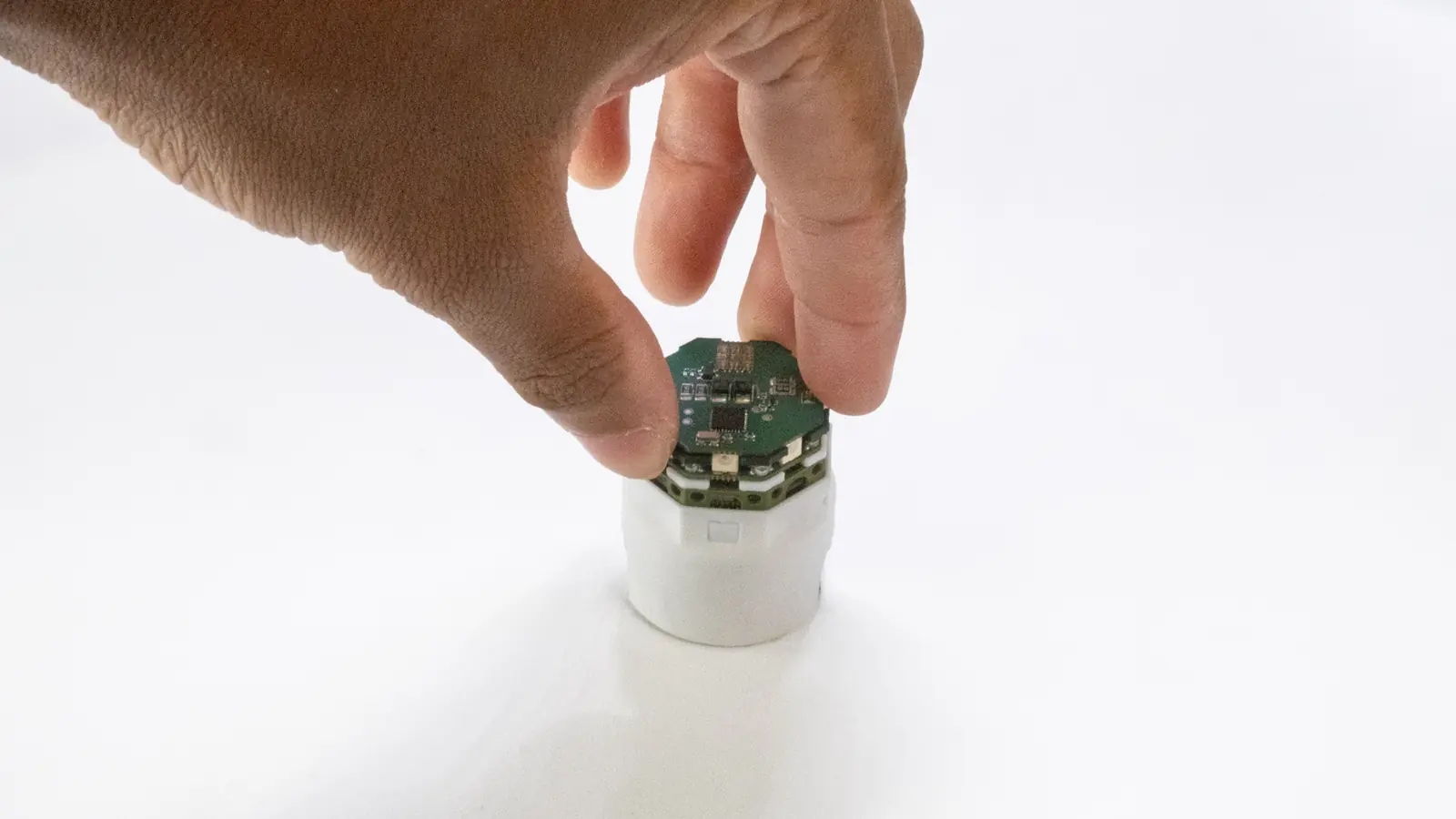
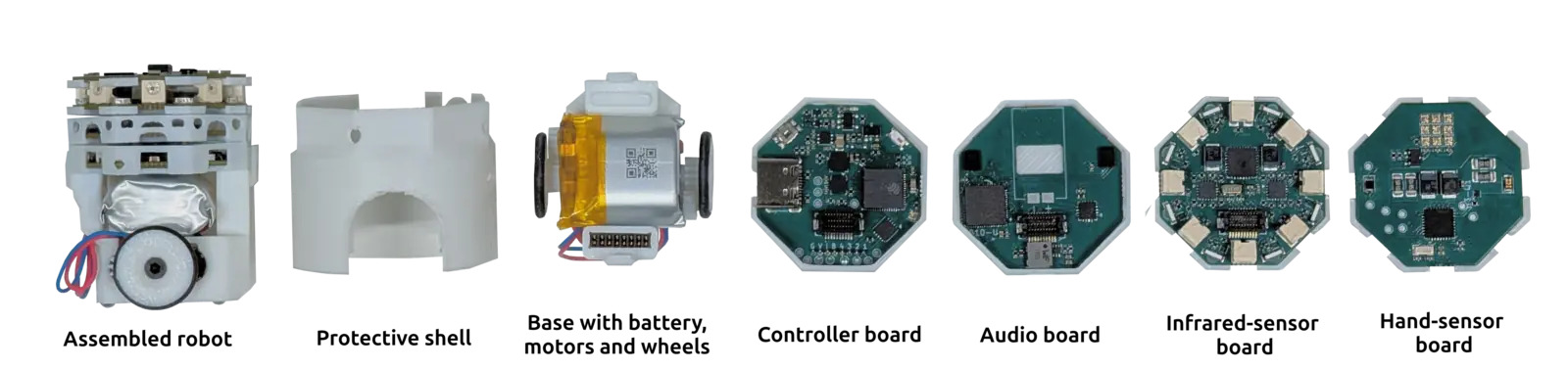
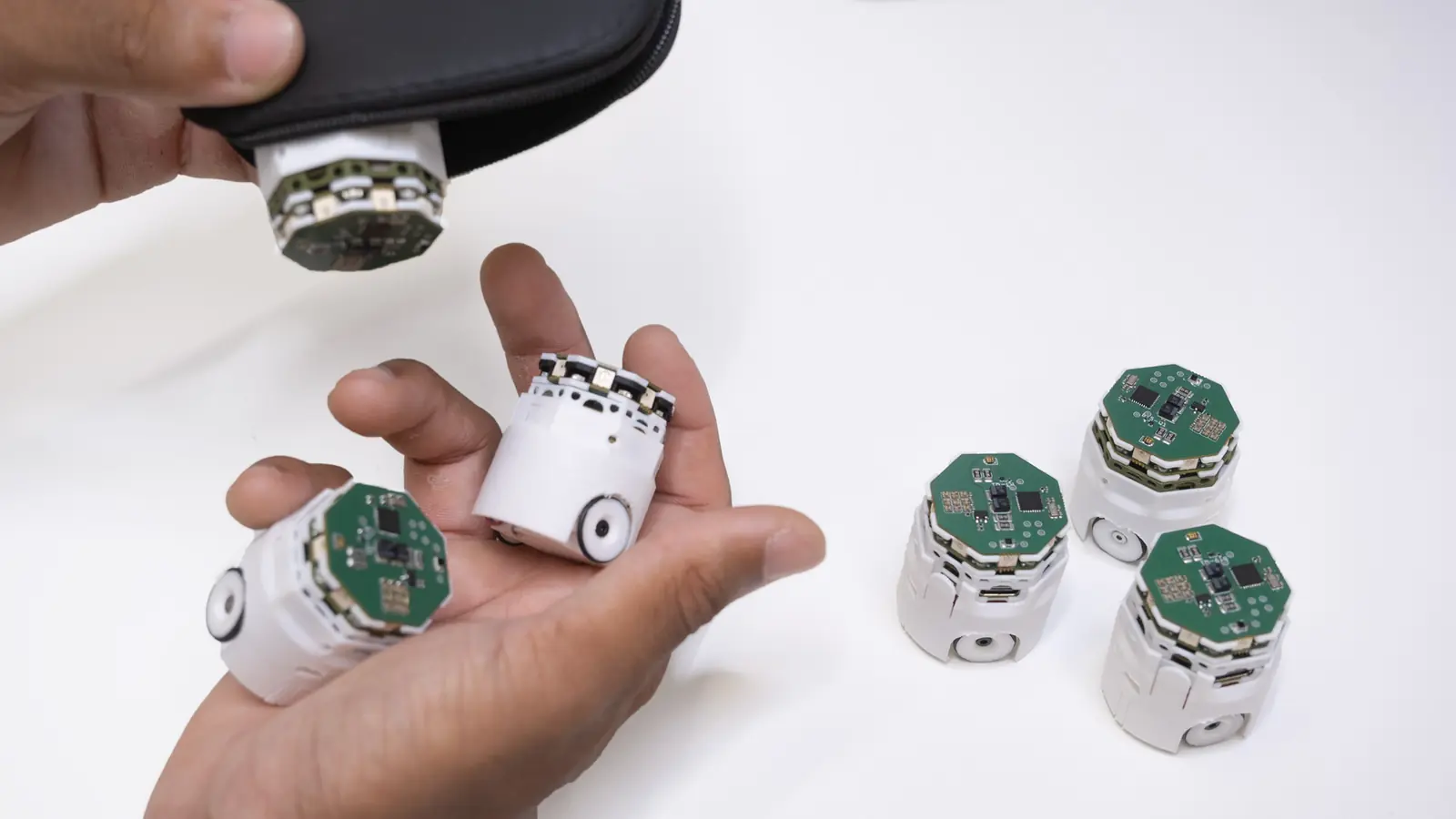
Swarm user interfaces are promising for tangible interaction and data physicalization, but most of them depend on an instrumented room, which Octon does away with. Each open-hardware robot is 35 mm wide, built from a stack of custom boards, and locates its neighbours with onboard infrared sensing. An emergent leader election gives the whole swarm a shared frame of reference.

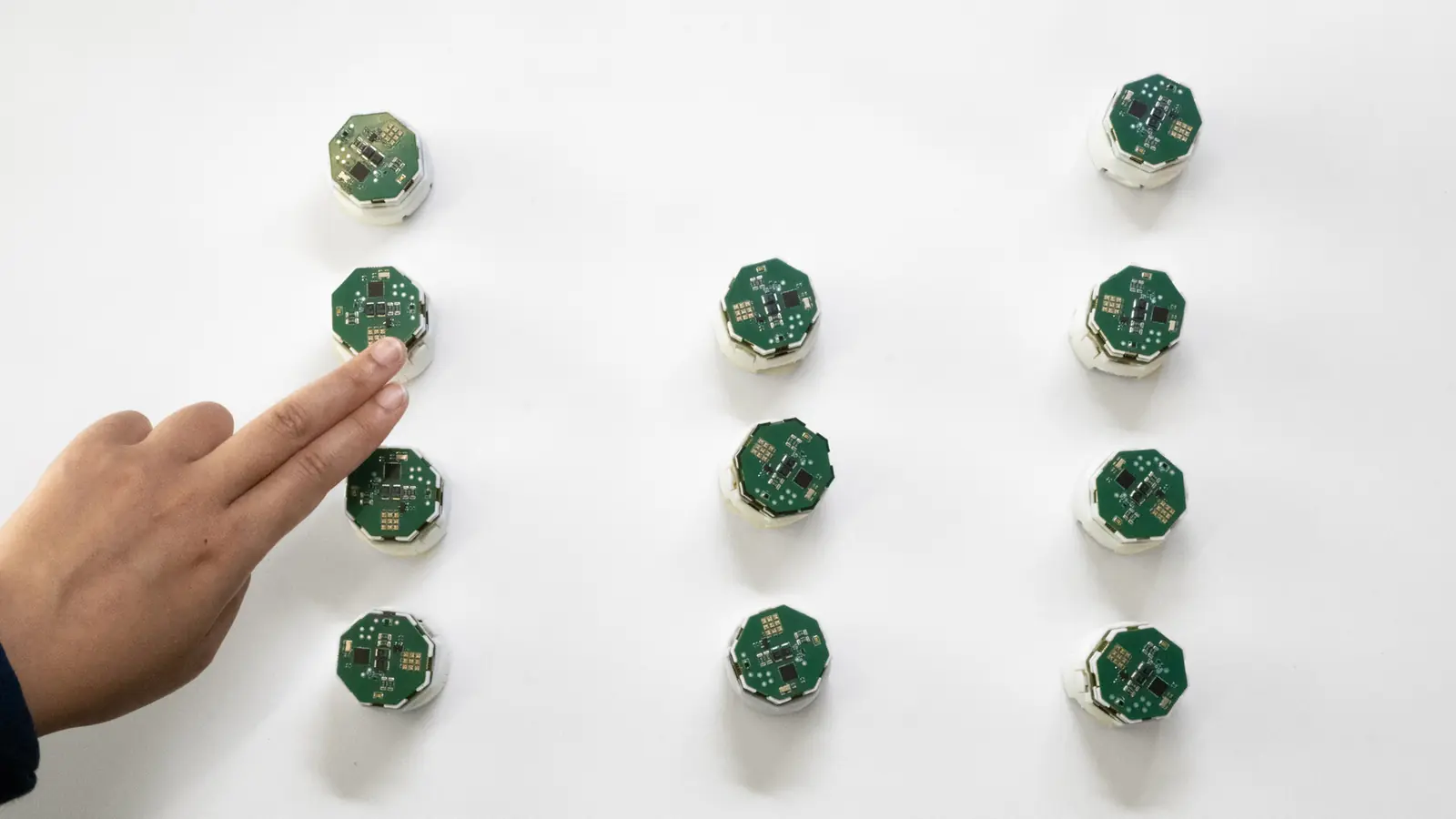
The swarm senses interaction by itself. You can move robots by hand, point with mid-air gestures or speak to them, with voice commands recognised offline on the robots and settled by vote. The number and layout of robots become part of the sensing: swarms of 7, 13 and 19 robots were compared for pattern formation and for gesture and voice recognition.
02

Online artwork

nom nom

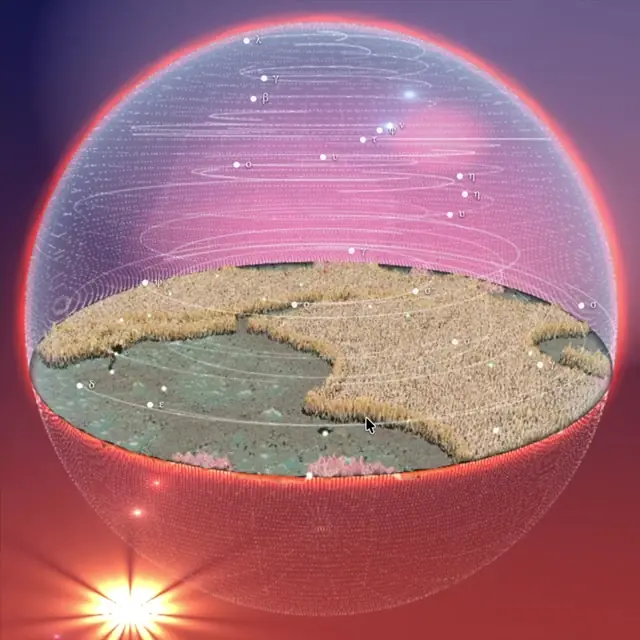
A living world grown by neural cellular automata, narrated by an AI observer and reseeded every day.

Year
2026
Context
With artist Xin Liu and Google Arts & Culture
Fields
Generative art, neural cellular automata, AI agents
Built with
NCA · GPU simulation · Gemini

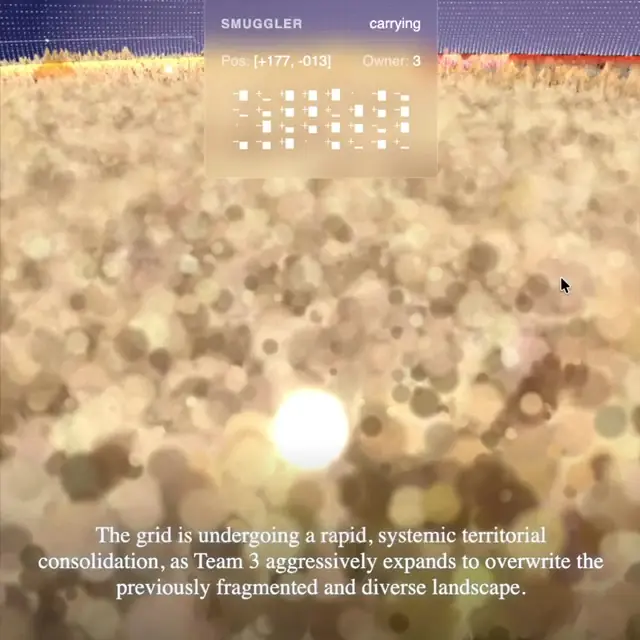
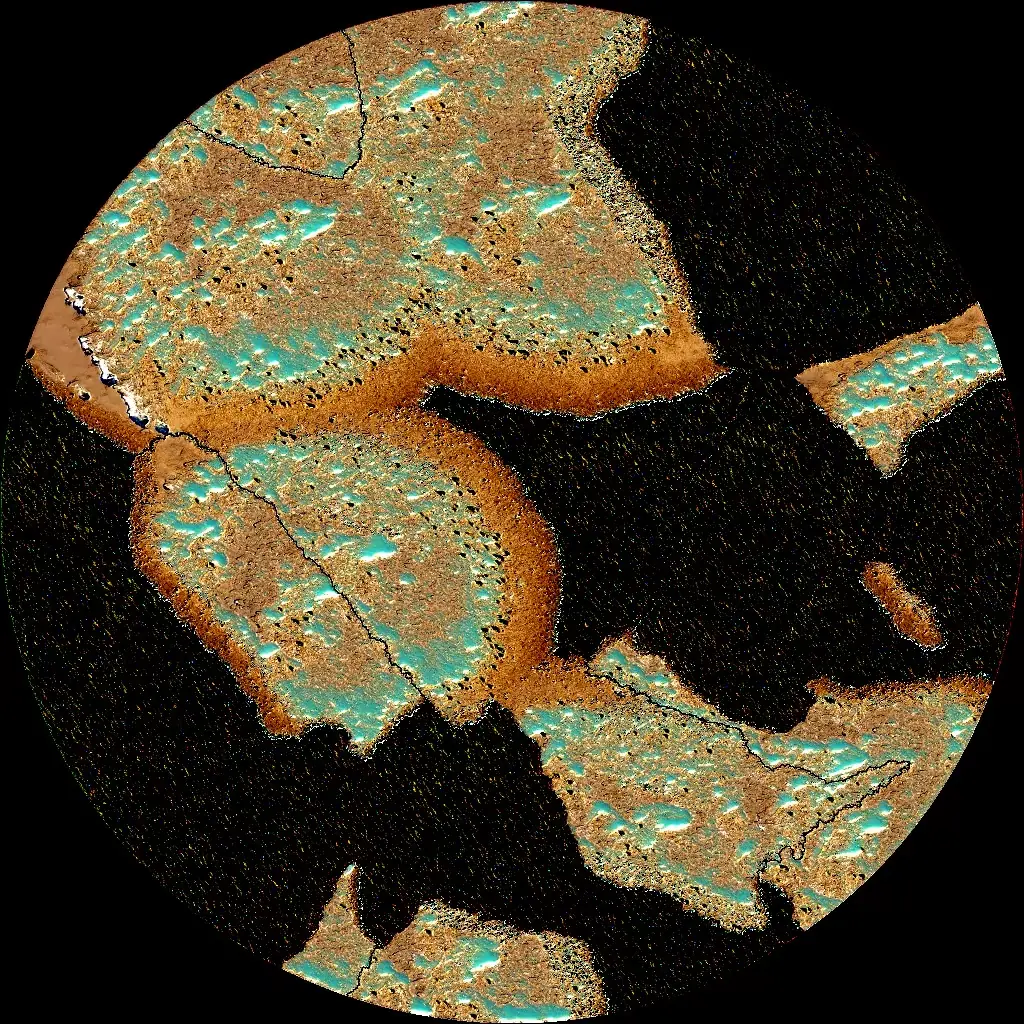
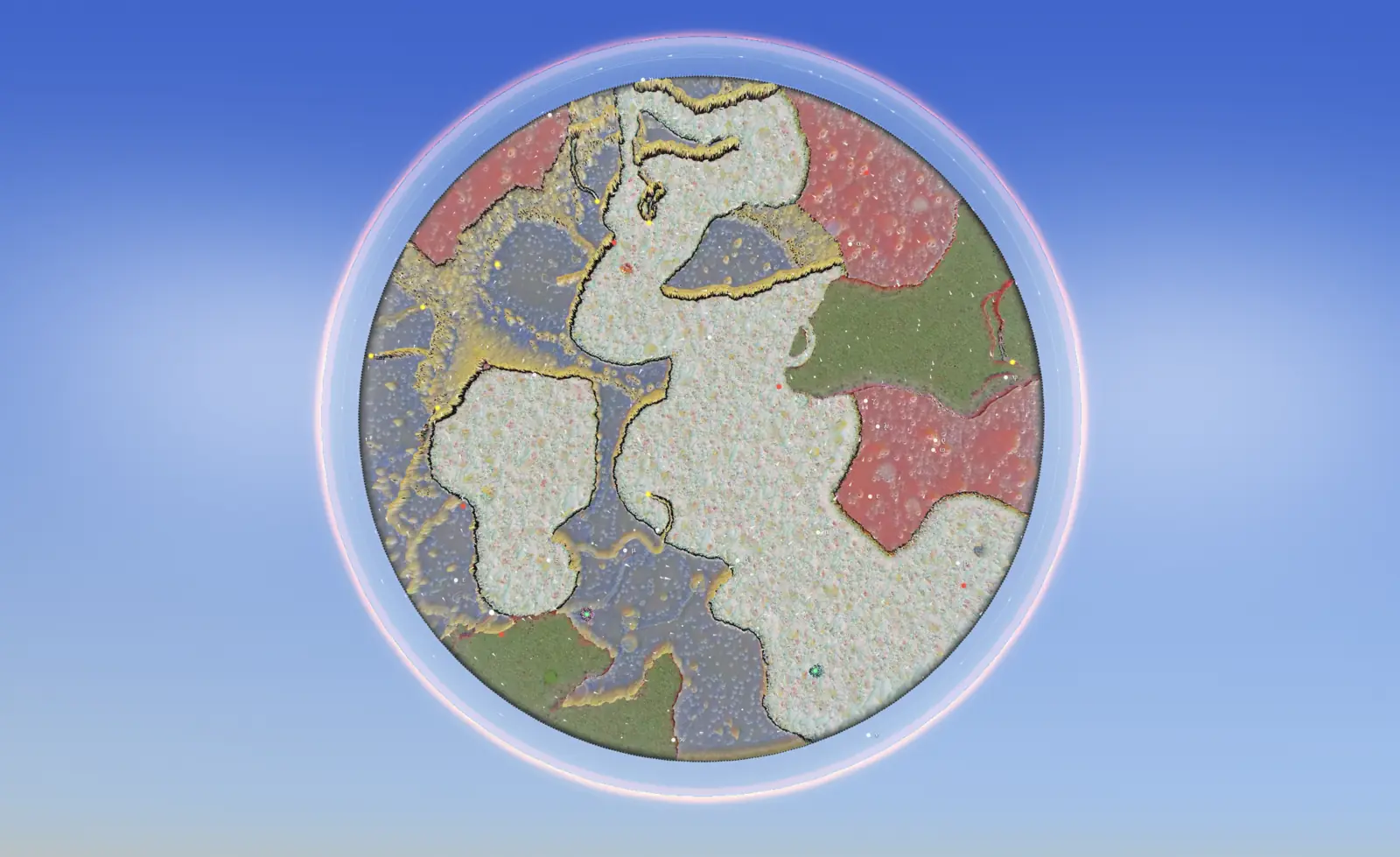
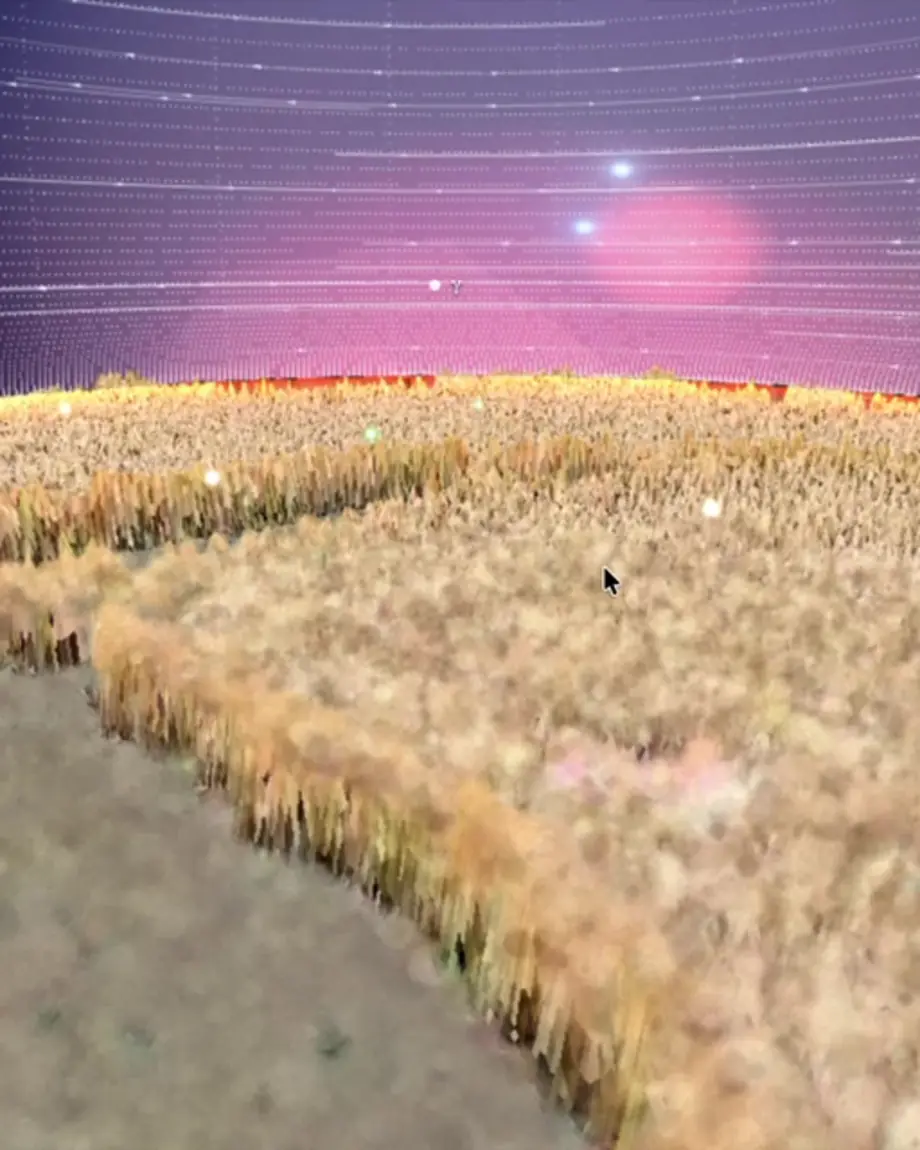
nom nom is a navigable online artwork made with artist Xin Liu and Google Arts & Culture. Four independently trained neural cellular automata share one high-resolution world and compete for territory. They grow, get displaced, mutate, take damage and recover, while creatures made of the same cells roam the map and weather writes directly into the cellular state.

Gaia, a Gemini-powered observer, periodically reads the world, narrates its history and can intervene through a small, bounded vocabulary of weather events. We call the approach metabolic worldbuilding: a generative system kept varied by its own cycles of growth and loss rather than by prompts.

03

MIT Media Lab visit

HearThereIOS

Spatial audio augmented reality with nothing but an iPhone and AirPods: hear a wetland’s live microphones exactly where they stand.

Year
2023
Context
Responsive Environments group, MIT Media Lab
Fields
Audio augmented reality, spatial audio, mobile
Built with
iOS · PHASE spatial audio · Opus · AirPods head tracking

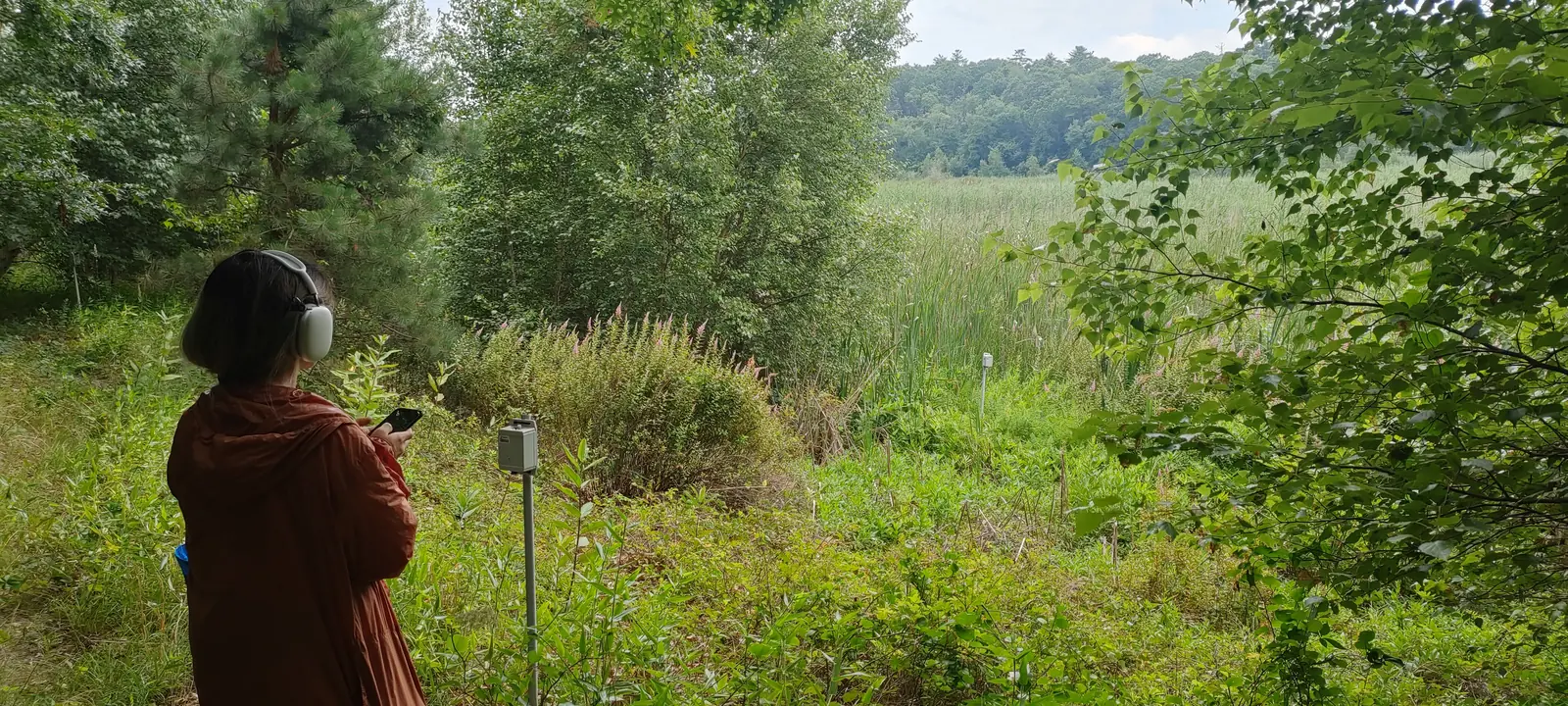
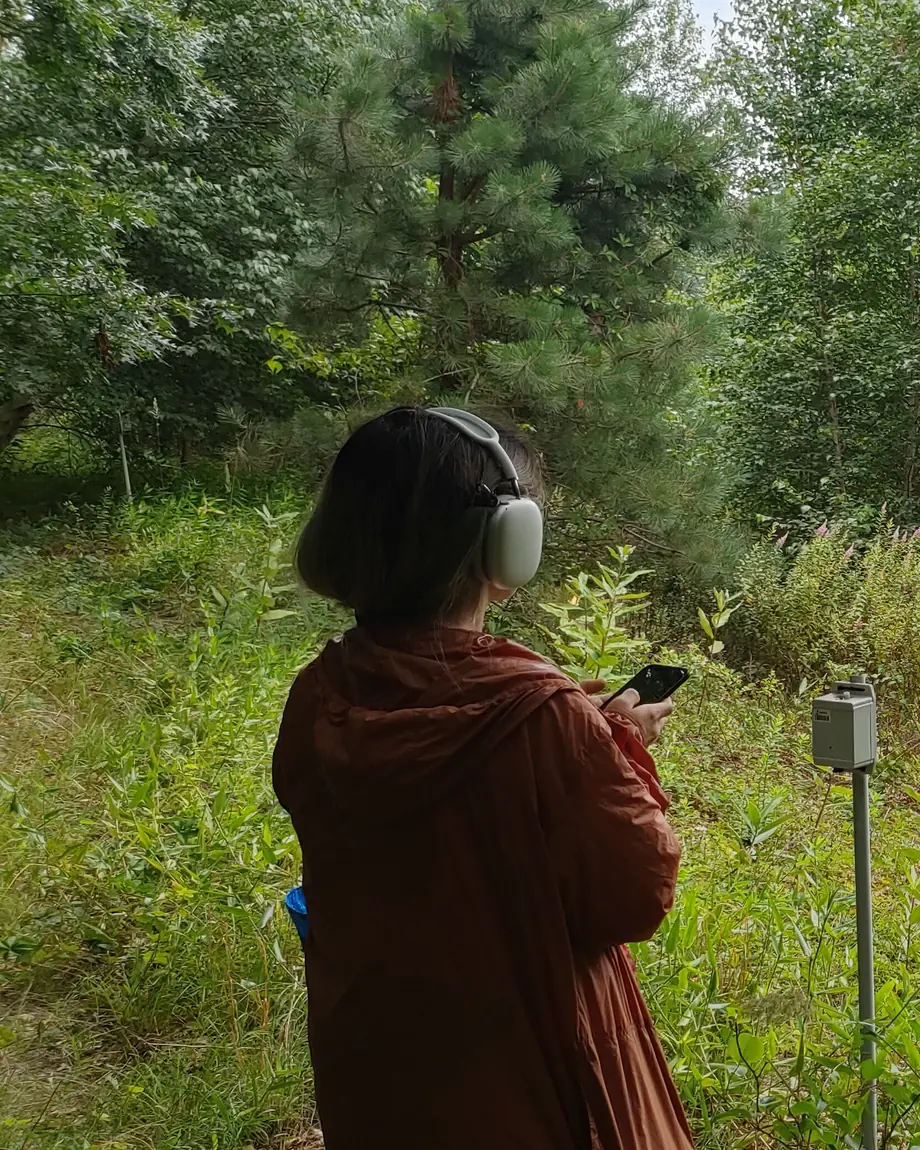
I built HearThereIOS during my visit to the Responsive Environments group at the MIT Media Lab, as a new take on the group’s original HearThere that runs on mainstream devices. Thirty microphones across the Tidmarsh Wildlife Sanctuary stream to a server. The app decodes the 30-channel Opus stream and renders each microphone as a spatial sound source at its real position, so a large natural space can be explored by ear.

AirPods track head rotation but have no compass, so a one-tap calibration aligns them with the phone’s heading while GPS places the listener. Interaction uses the head alone: look toward a sound to bring it closer. A pilot study with six participants, in 15-minute listening sessions on site, evaluated usability and how people experienced the sessions.

A person wearing headphones stands in a green meadow looking at a phone, next to a small sensor post.

04

IFT · open source

GOSAI

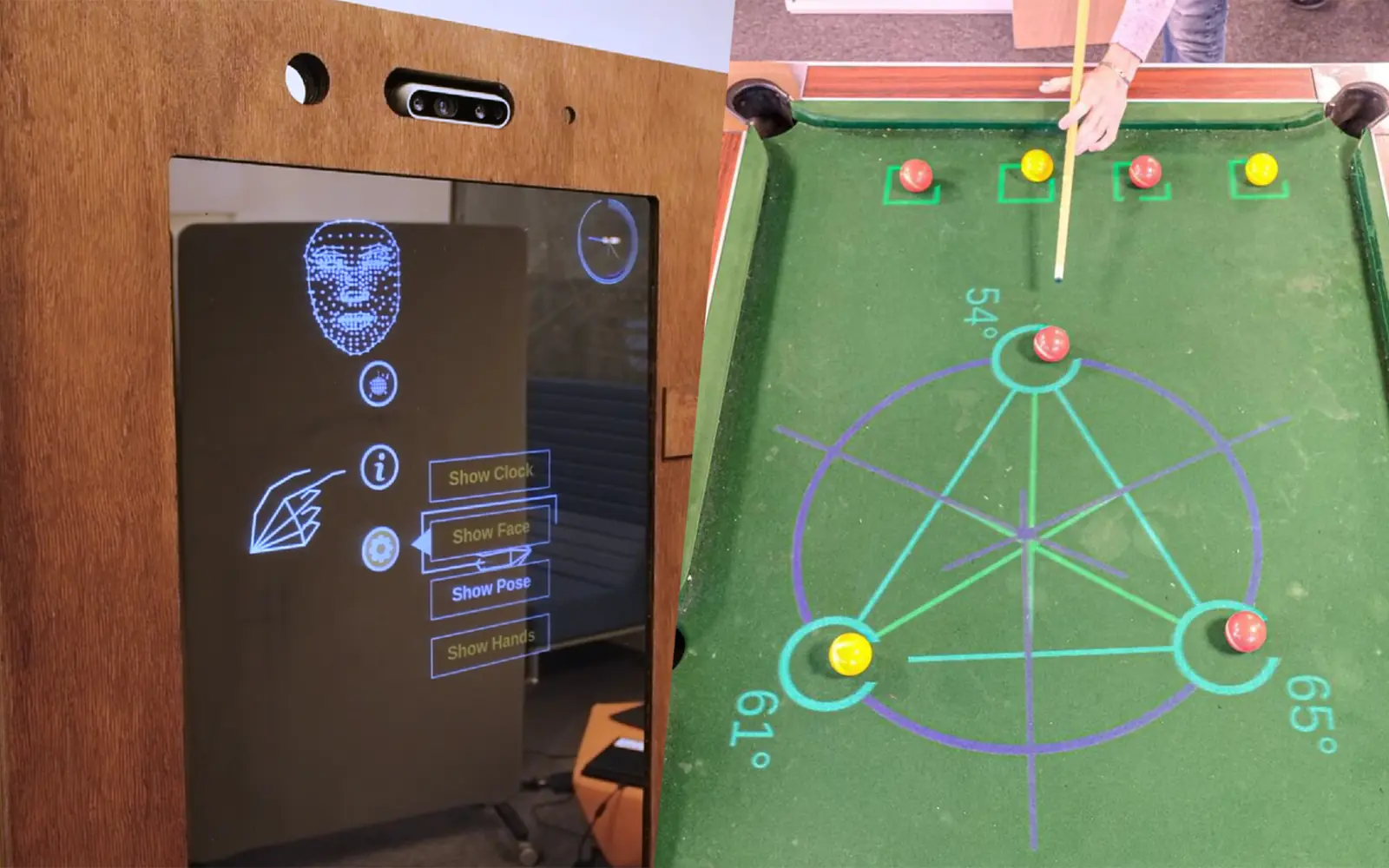
A General-purpose Operating System for Augmented Interfaces: one framework for mirrors, projected tables and screens.

Year
2021–2024
Context
IFT, with Maxime Broussart and Adrien Lefevre
Fields
Augmented reality, HCI, software architecture
Built with
Python · JavaScript · Redis · Socket.IO
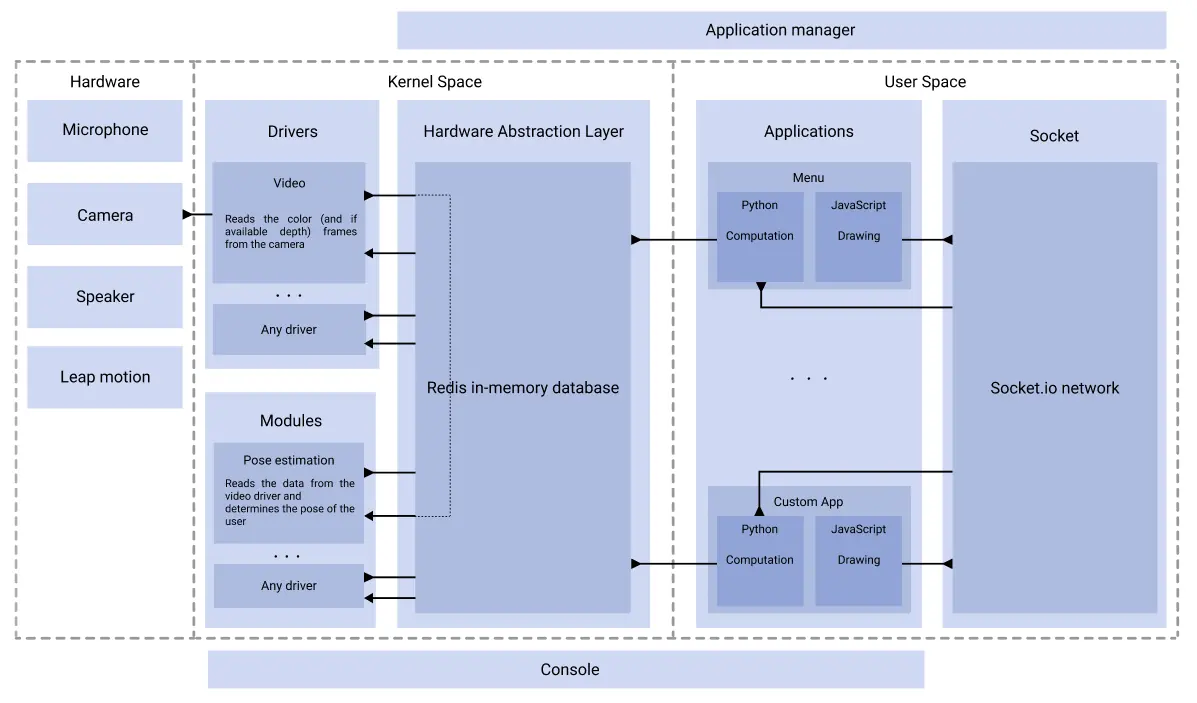
  1. 01 Framework Kernel, hardware abstraction layer, drivers and modules, plus the app manager.
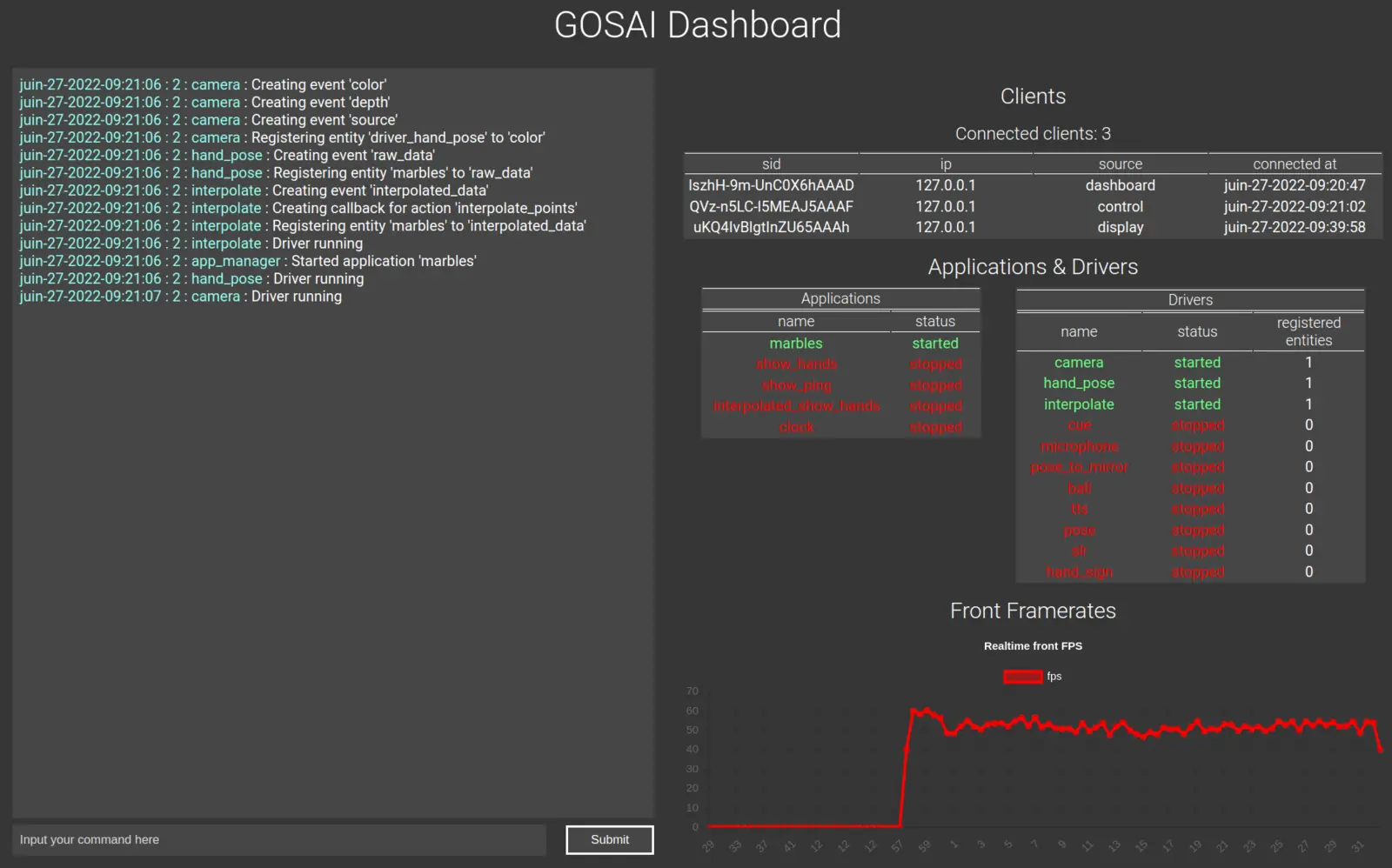
  2. 02 Tools A network dashboard with a console and live performance charts, and a remote control interface.
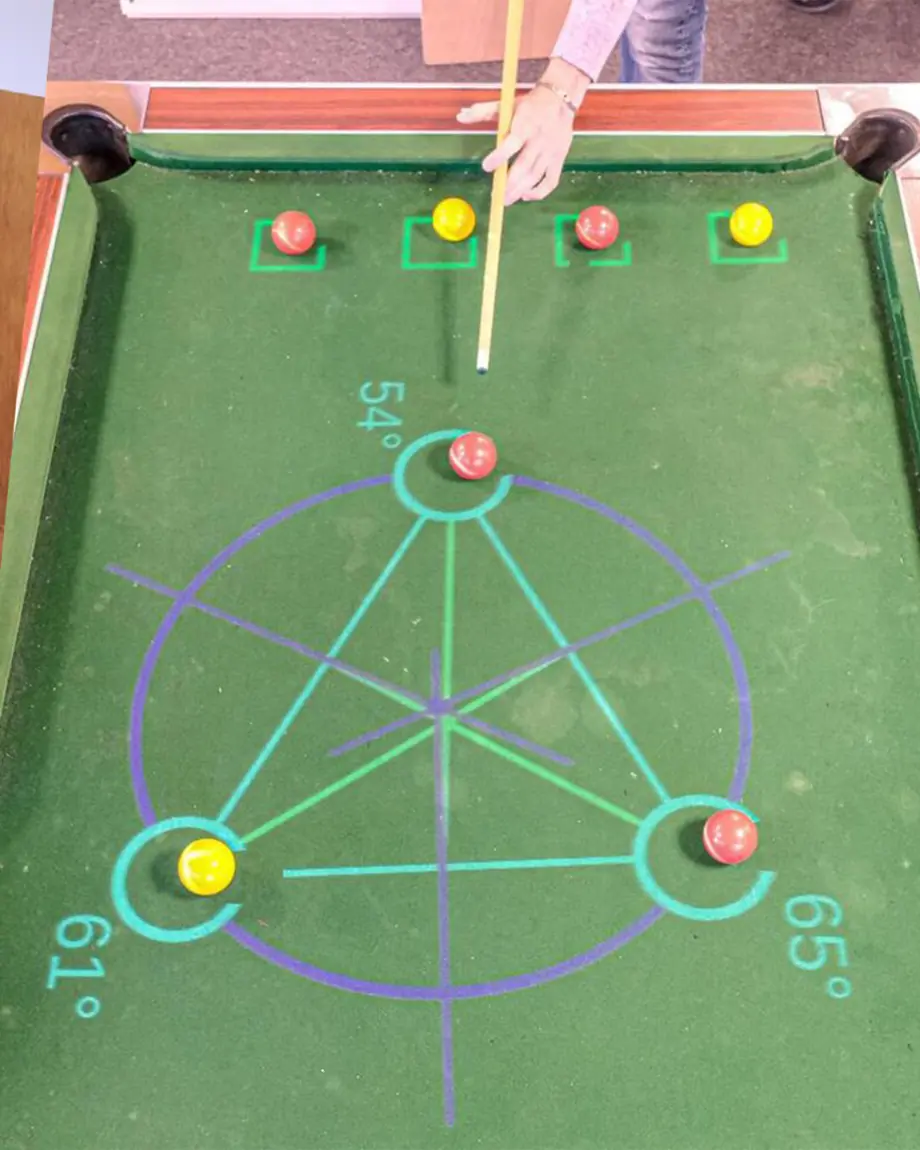
  3. 03 Deployments The Second Self augmented mirror and a projected pool table.

GOSAI borrows its architecture from UNIX. A kernel with a hardware abstraction layer starts drivers and modules on demand, such as a depth camera or pose estimation. Each one runs in its own process and shares its output through Redis. In user space, every app is a small Python backend paired with a JavaScript canvas frontend, talking over Socket.IO. Drivers and apps are reusable across projects, so a catalogue of components grows over time.

05

IFT research

Wandering Mind

An attempt to steer dreams with sound, guiding sleepers through a landscape of field recordings.

Year
2021–2023
Context
IFT research, with Gershon Dublon, Xin Liu, Clément Duhart, Yliess Hati and Vincent Thevenin
Fields
Sleep and dreams, sound, HCI
Built with
cables.gl · Flask · BYOL-A · custom sensor
  1. 01 Re:Discover A cables.gl visualiser for travelling through the space of sounds.
  2. 02 Online study A web survey rating field recordings by the “energy” they give a listener.
  3. 03 Sensor A device for monitoring the sleeper’s physiological state.

In the hypnagogic state, between waking and sleep, we still respond to sound. Wandering Mind explores a closed loop: a sensor follows the sleeper’s physiological state while an AI agent, or a human performer, travels through a space of real-world recordings to shape what they dream about.

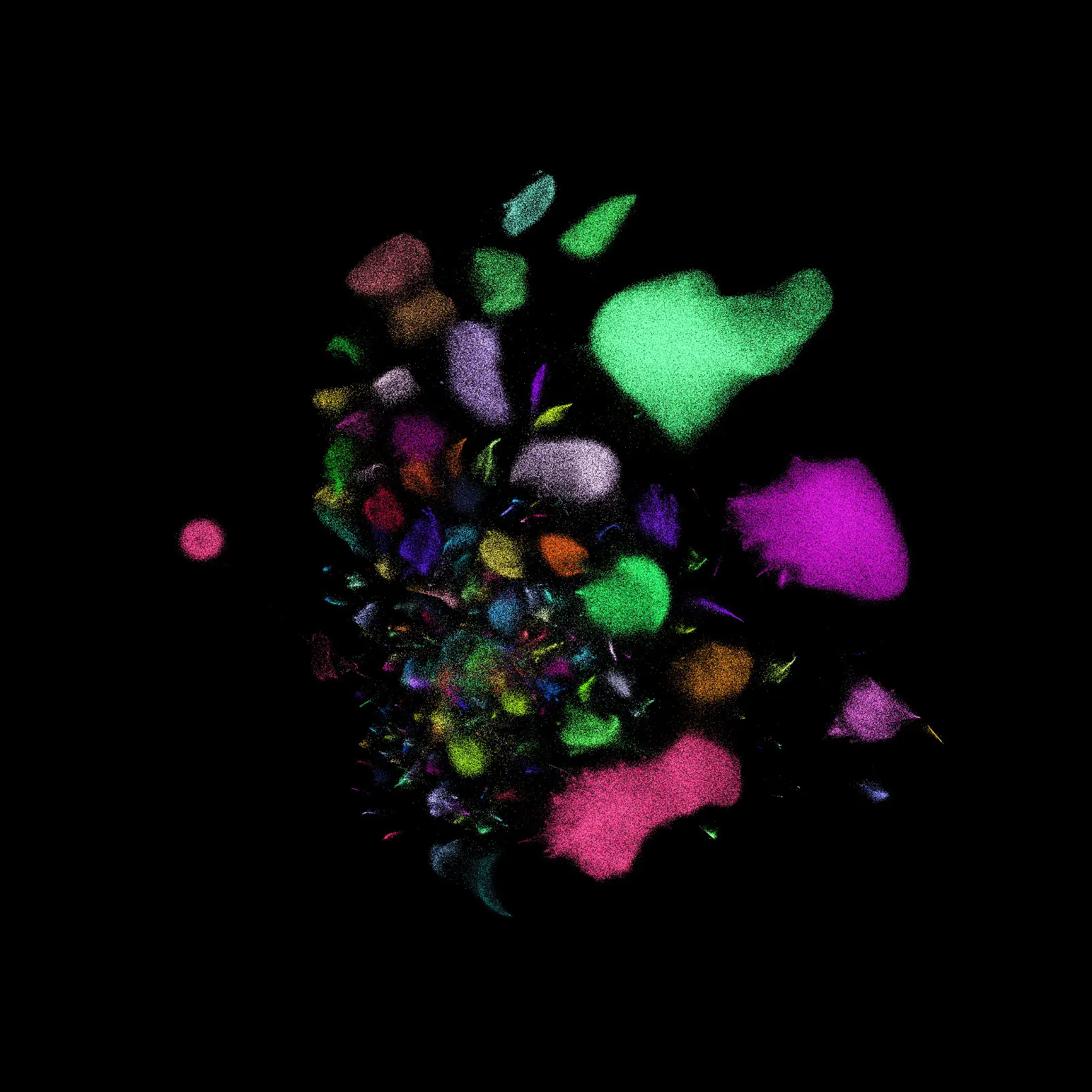
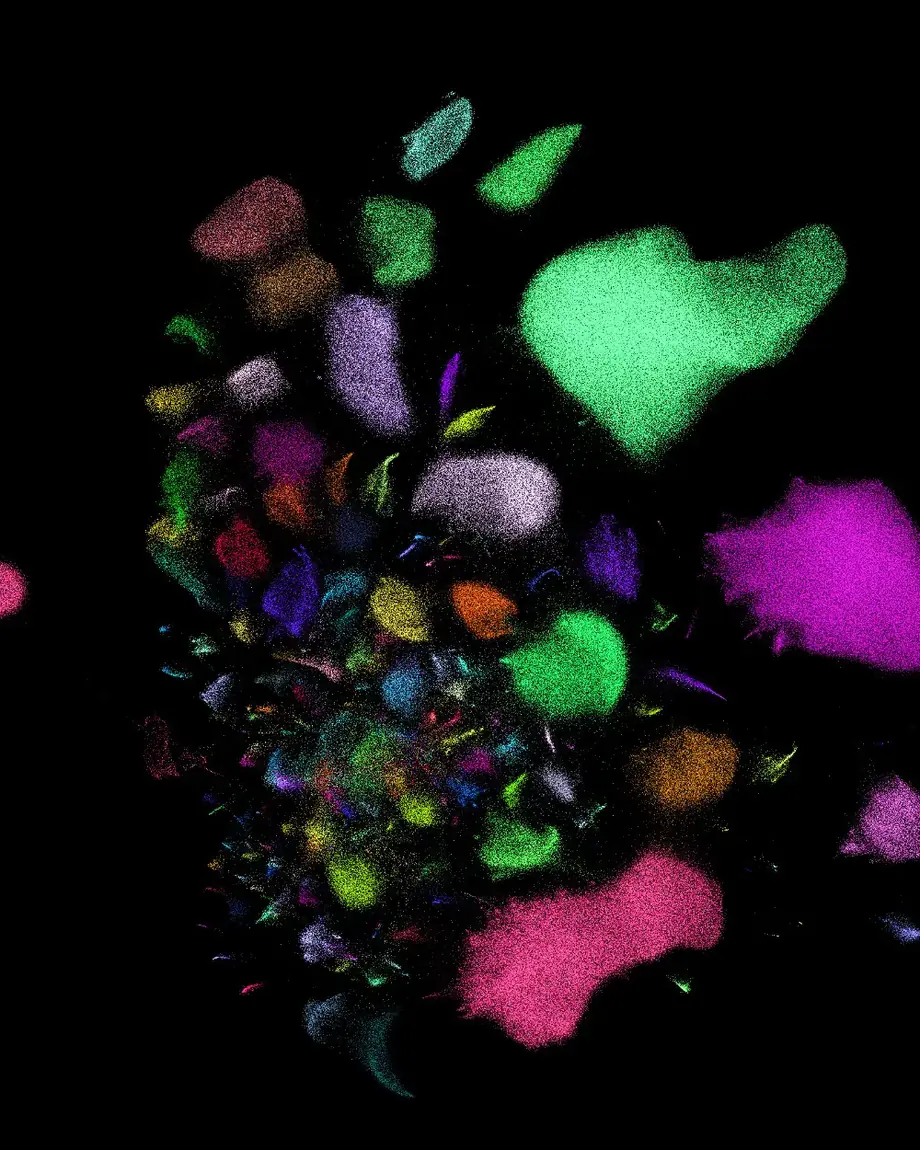
I built all three parts. From Radio Aporee’s 2.35 million five-second clips, 1,000 were sampled, embedded with BYOL-A and projected to 2D, so participants’ ratings could spread to the rest of the dataset.

Clusters of coloured points floating on a black background.

06

Personal · ongoing

Wall of Tracks

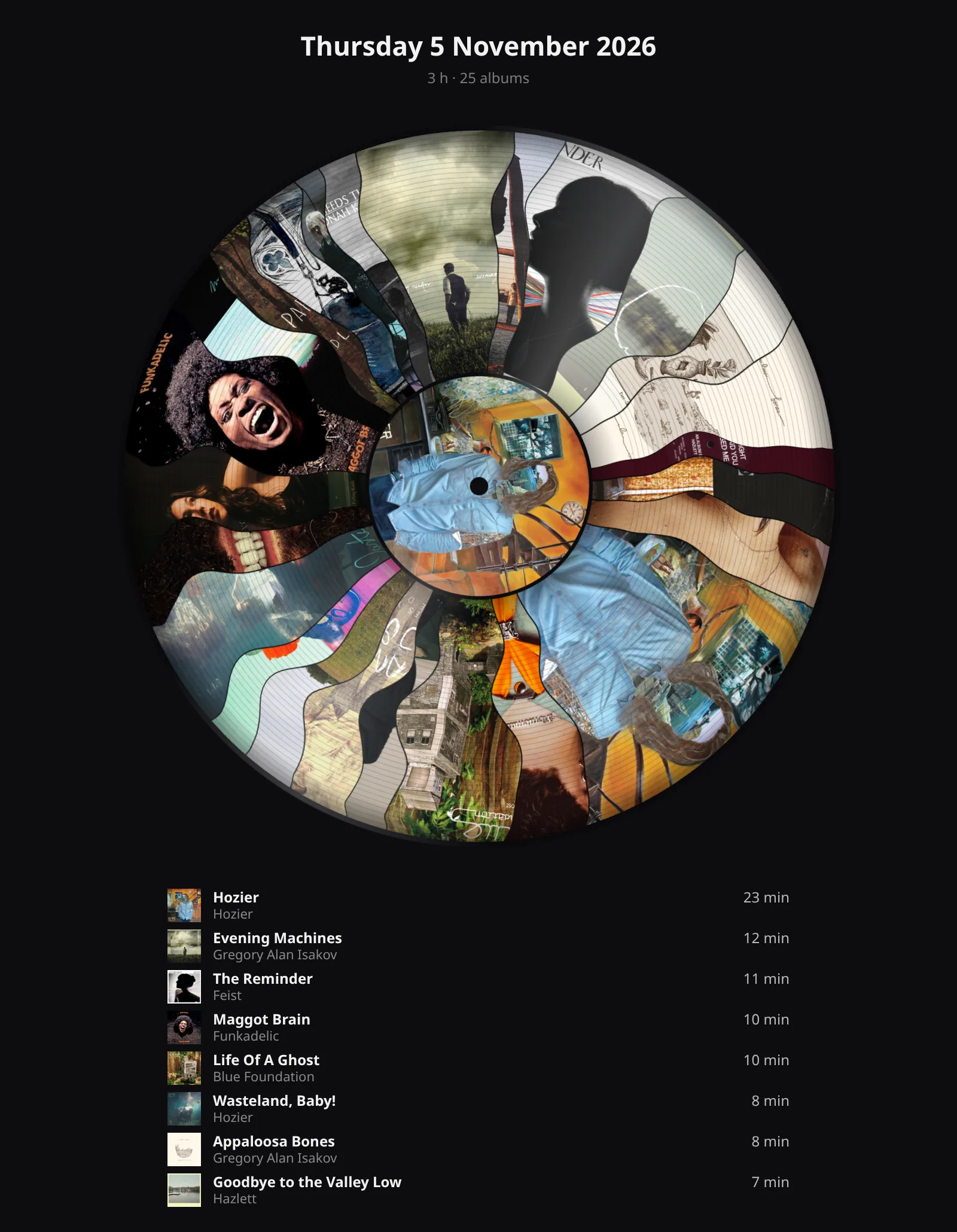
A live record of everything I listen to, and a diary with one record for every day since 2014.

Year
2021–now
Context
Personal project
Fields
Generative art, music, data
Built with
Spotify Web API · Python · SQLite · WebGL · Android

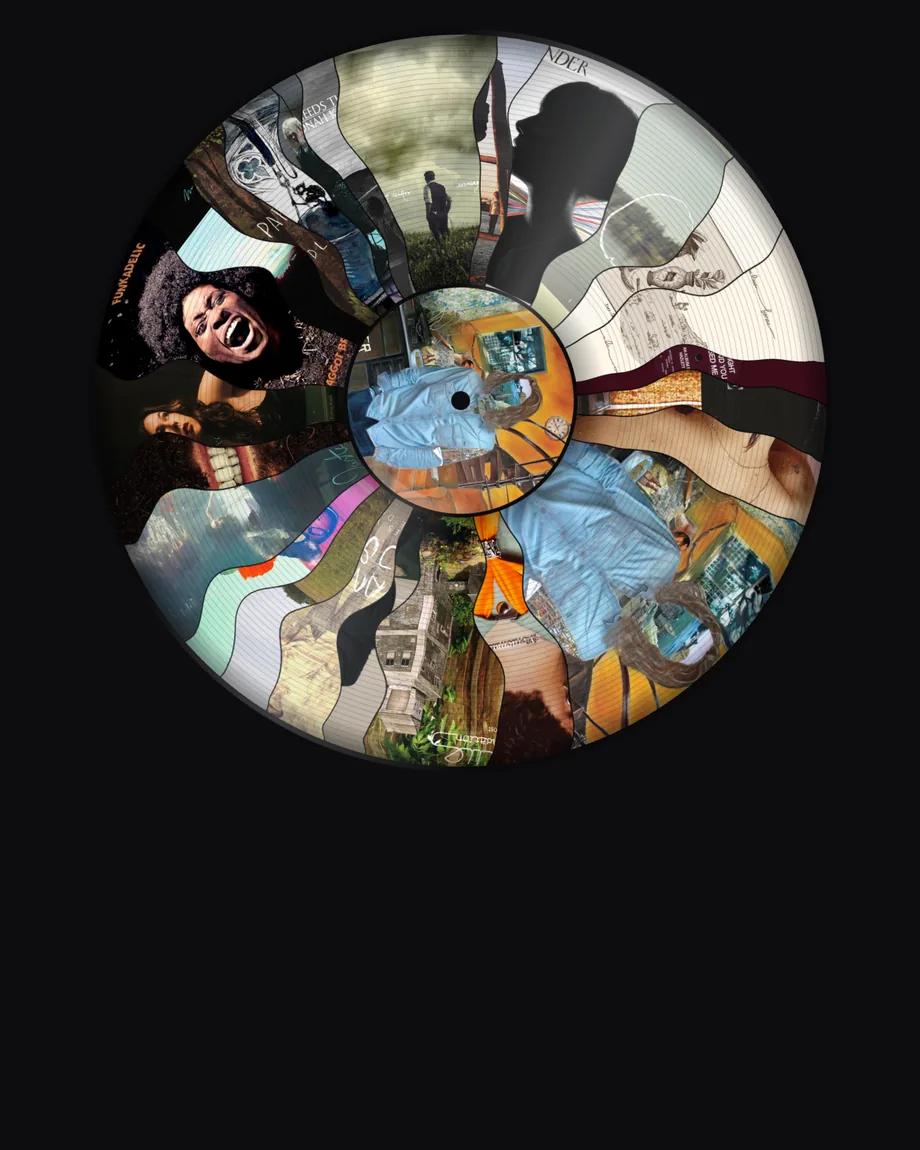
A tracker on my server logs every song I play on Spotify, on top of the full history since 2014. The live page presses the last 24 hours into a picture-disc vinyl: each album is one slice of its cover, sized by listening time and placed around the colour wheel. The slice edges wave, the surface slowly flows, and the record spins only while music is playing. A skip or a pause shows within seconds, and the same record runs as a live wallpaper on my phone.

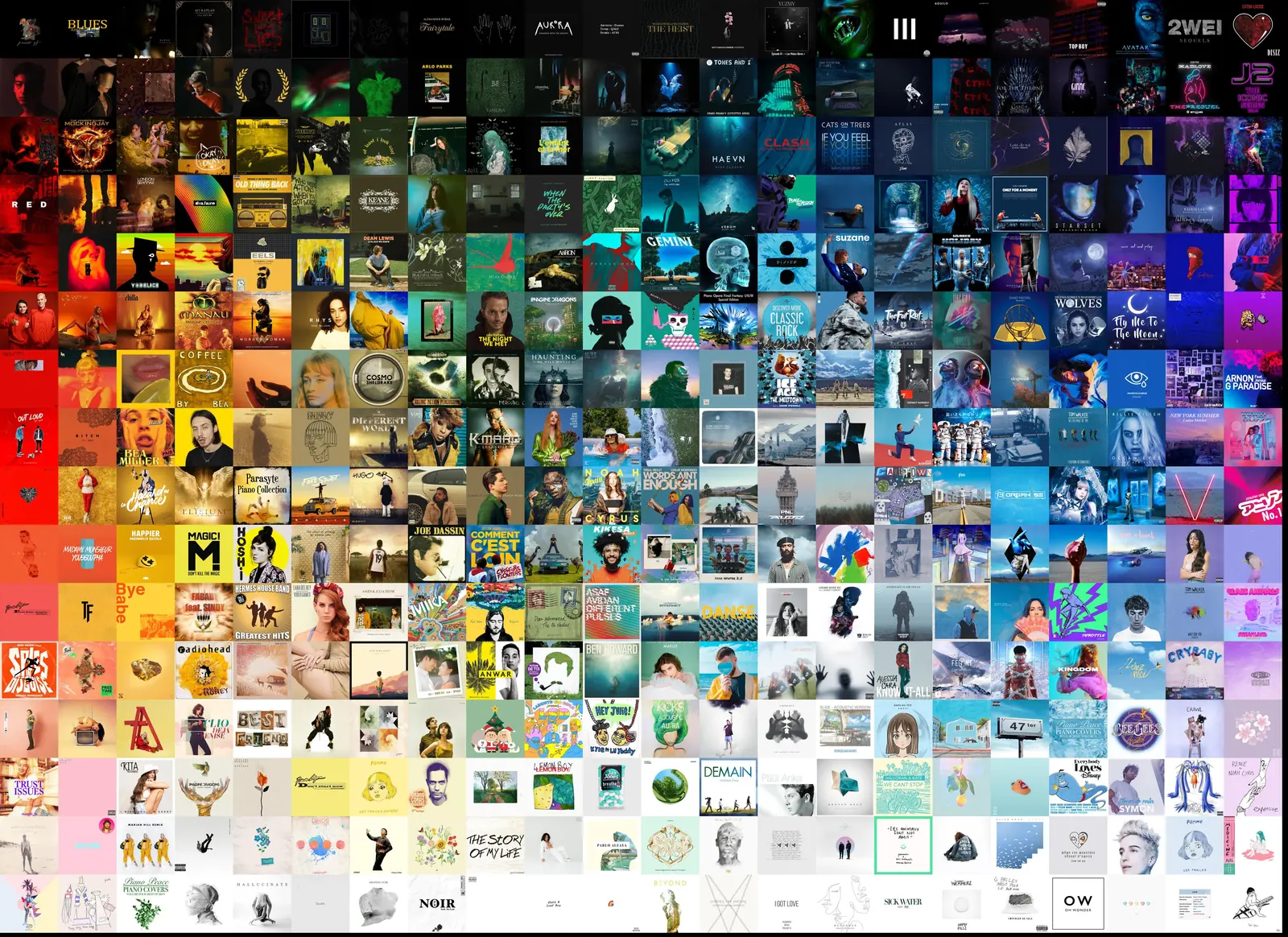
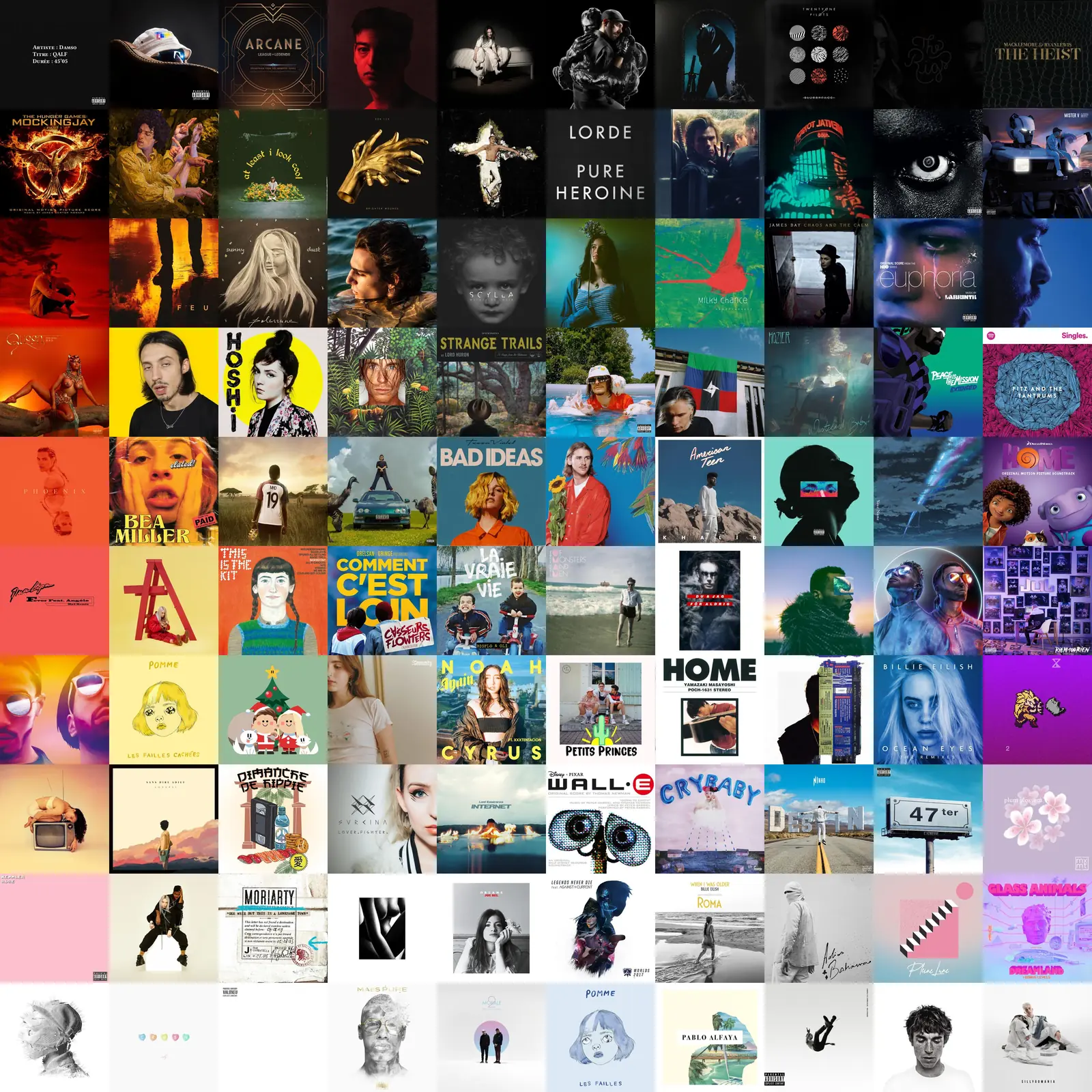
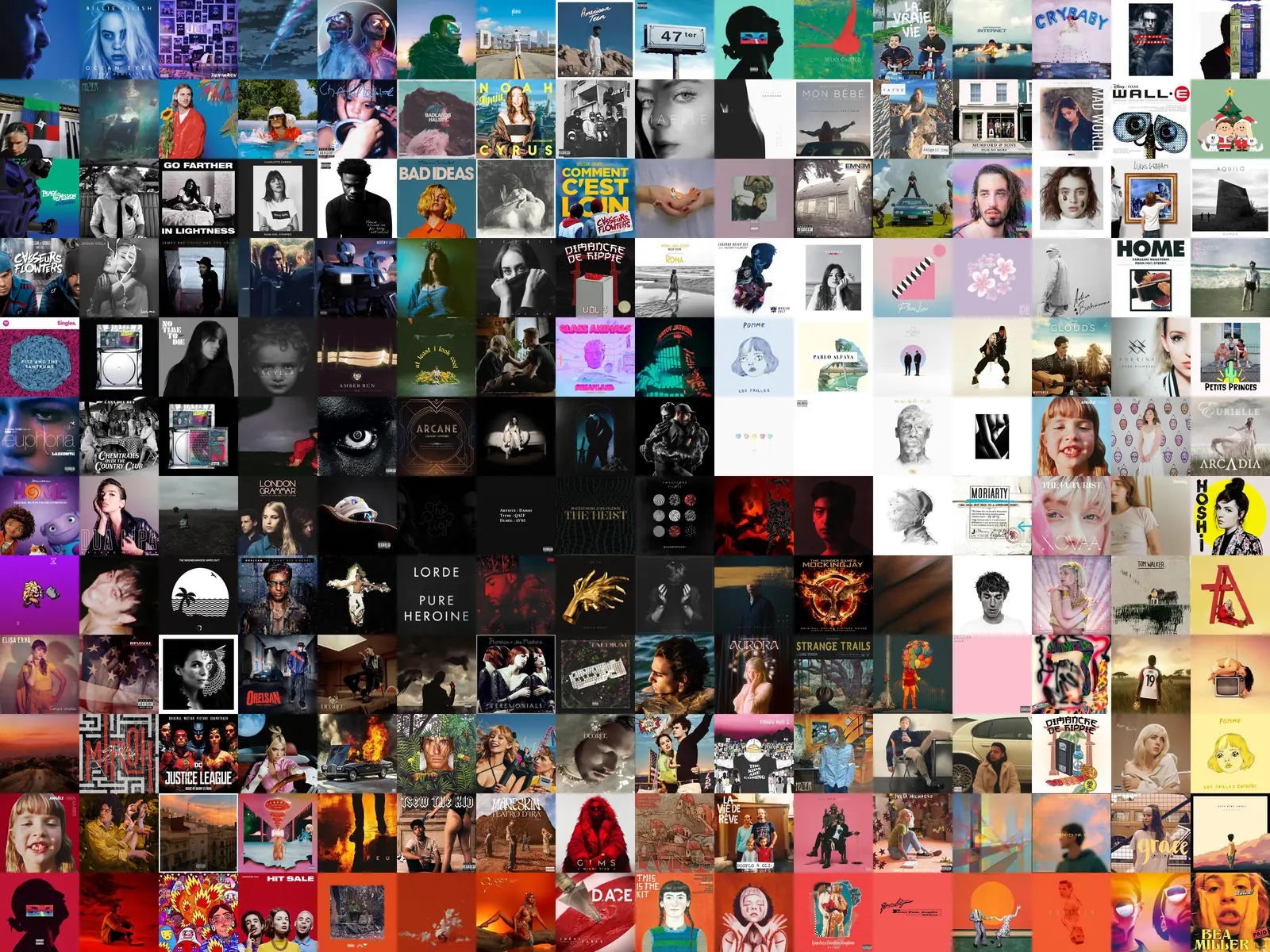
The past-listening pages turn the whole history into records too: one per year, albums placed along a spiral of time, and a diary with a record for every day since 2014. It started in 2021 as mosaics of album covers sorted by colour. Taken together, the records are a kind of self-portrait of my taste in music.

Smaller things, made along the way.

About

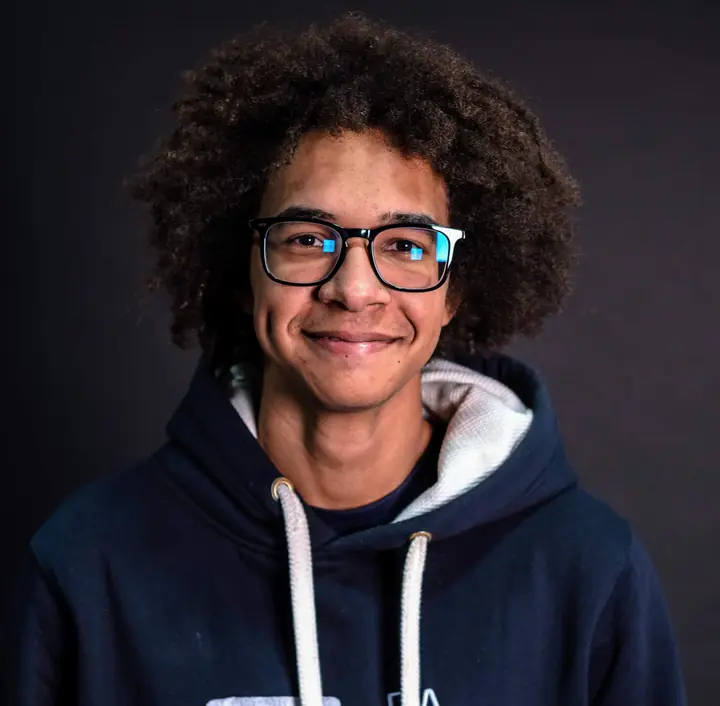
Portrait of Thomas Juldo, smiling, wearing glasses and a dark hoodie.
Thomas Juldo · Paris, France

I’m a Ph.D. student at the Institute for Future Technologies (IFT) in Paris, with my advisors and doctoral school at Sorbonne Université.

I work in human–computer interaction, on projects that move the interface off the screen. I like building the whole stack myself, from circuit boards and firmware to machine learning and the web front-end that ties it together.

  1. Now Ph.D. student Institute for Future Technologies (IFT), Paris Decentralized, multimodal interaction with tabletop swarm robots (Octon). Advisors and doctoral school at Sorbonne Université.
  2. 2023 Research visit Responsive Environments, MIT Media Lab Built HearThereIOS, spatial audio AR for the Tidmarsh Wildlife Sanctuary.
  3. 2022–23 Intern, then consultant Sonos, London Acoustic research, tools for researchers, prototyping and hardware hacking.
  4. 2020–22 Creative Technology major IFT, Institute for Future Technologies GOSAI, Second Self and Wandering Mind.
  5. 2019–22 Engineering curriculum ESILV, La Défense
Code
Python, PyTorch, C / C++, GLSL / OpenGL, JavaScript, Vue, Swift
Electronics
KiCad, Altium, embedded (ESP32, STM32), power electronics
Making
SolidWorks, Onshape, Grasshopper, 3D printing
Languages
French (native), English (C1), German (A2)

Say hello.

I’m open to research collaborations and art projects, and always happy to talk about swarms, sound or living systems.